

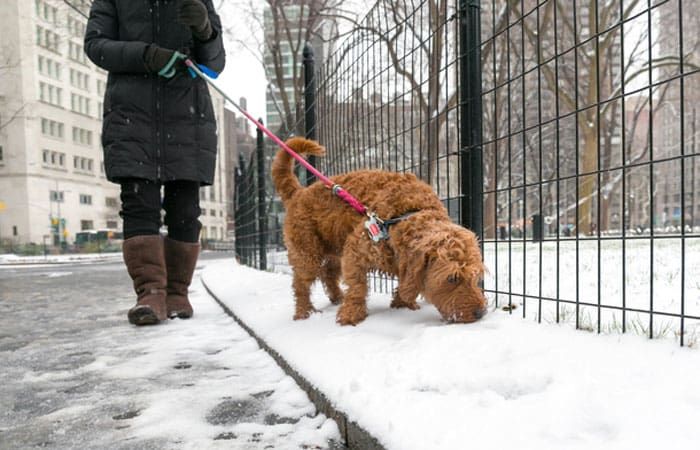
I’ll never forget my first wintertime visit to the northeastern U.S. As a native of northern California, the coldest place I had visited previously was either Lake Tahoe or Crested Butte, Colorado – both of which are ski towns. When you go somewhere that’s 10 feet deep in snow, you walk carefully, knowing that the ground is icy and slippery. But on that visit to Boston 20 years ago, it was about 20°F. with no snow in sight – no visual reminder to this California girl that the sidewalks were, nevertheless, icy and slippery.
So, in the middle of the afternoon, when I casually but ebulliently hopped over what appeared to be a puddle of water onto what appeared to be dry sidewalk on the other side, the foot I landed on slid wildly on ice and after a few seconds with embarrassing windmilling of limbs, I ended up on the ground with my jeans torn at one knee, raw palms, and a skinned, bloody knee. The pain of that bloody knee exposed to the brutally cold wind for the rest of the afternoon’s walk was like daggers; I am shuddering now at the memory of it. How, I thought at the time, do people LIVE with icy sidewalks?
Ice Is Dangerous – But Ice-Melts May Be, Too
Well, it turns out that an awful lot of people (and businesses) use commercial ice-melting products – and while these products can make walking around much safer for humans, some of them are hazardous to the dogs that accompany their humans on these frigid winter walks.
There are a couple of ways that humans need to protect their dogs from ice-melting products.
2 Steps to Keeping Your Dogs Safe
First, you have to be aware that some dogs will try to ingest (or at least lick and taste) any sort of pellets or granules they encounter on a sidewalk, or that has been tracked into your house on your shoes. Some ice melting products work by heating up (a chemical reaction) when they come into contact with the water present in ice – or on your pup’s tongue or wet feet. Chemical burns can result.
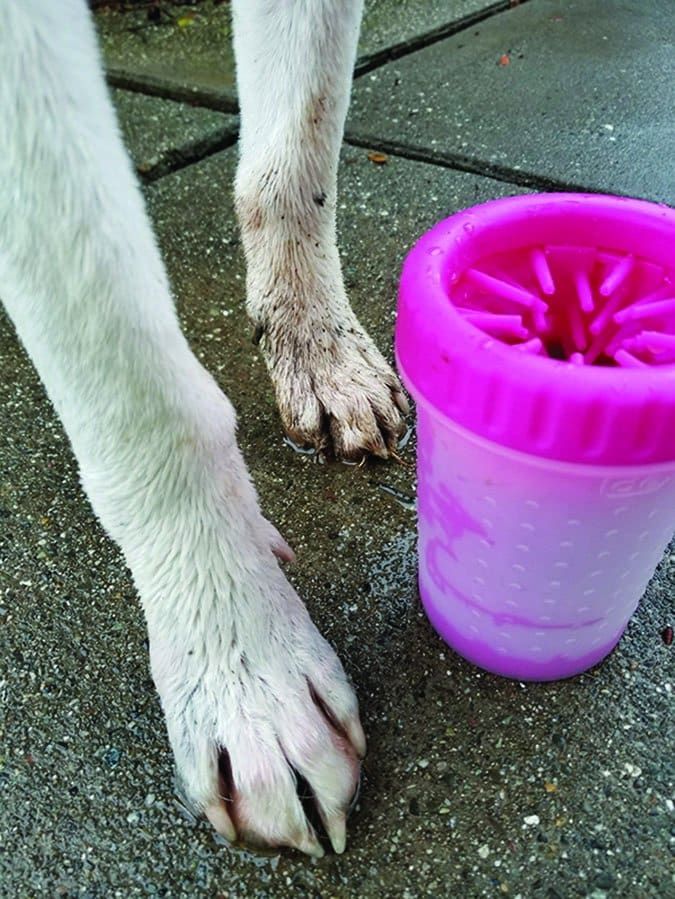
Dogs may also ingest these chemicals when they lick their feet after coming into the house following a walk. Whenever you walk your dog on roads or sidewalks that have been treated with ice-melting chemicals, you should rinse and dry your dog’s feet after you come inside. (The Mudbuster is a great tool for this purpose; see our review here.)
Ice-melting product makers are not required to list their ingredients on the label of products you might consider buying for use on your own property – and you have no idea what sort of products are being used in public. Rinse and dry those paws! Or, habituate your dog to wearing protective boots when ice-melting products are in use in your neighborhood.
A Pet-Safe Pre-Treatment to Prevent Ice From Forming
We’ve had a number of communications from the maker of one ice-control product, PlaySafe Iceblocker. PlaySafe is a liquid product that is directed for use as a preventative rather than as something that you use to melt ice that has already formed; you spray it on your sidewalks and decks when snow is expected and it prevents fallen snow from freezing and turning into ice. Its maker says the product is safer than any pelleted ice-melting products because, applied as a light spray, it can’t be ingested as readily as stray pellets.
PlaySafe also discloses its ingredients on its label, unlike many of its competitors. The maker says, “A dog on the label triples the price of most ice melting products, but it does not make them safe. Some products claim to be safe and they’re not, others claim to be effective and they’re not. All of them prey on the instincts of responsible pet owners. The industry is unregulated, and retailers don’t vet these products. What’s worse is parents believe these products are safe, so they don’t take the appropriate precautions” (such as applying protective boots or assiduously rinsing and drying your dog’s feet every time you come back into the house).
Those of you in frozen lands: How do you deal with icy sidewalks and protect your dogs?




We make it a point to bathe our dogs paws in a bucket of warm water with Castile soap, especially during the spring & summer months when lawns have been sprayed with toxic herbicides. The same solution is used during wintry months when salt and other brine is used on roadways here in Ohio. Our Greyhounds walk fine with the “PAWZ” latex booties, thin enough that they can still feel the ground and/or mark yet still provide some protection.
I have yet to find booties that are ergonomically designed and easy on easy off and that stay comfortably on during high activity level!
I love Pawz booties. We’ve also used them for our older dogs to give them better traction on slippery floors. Some one on line makes a device to make it easier to get them on. Looks like a pair of cooking tongs. The bootie slips on, you squeeze the handle which open the rubber bootie and you place the foot in and slide the boot off the tongs.
I use dog boots called, Pawz by Protex. They are a thick latex type of material and fit snugly on the dogs paws, making them harder to pull off. They also come in a large number of sizes and provide some grip on slippery surfaces like ice or linoleum flooring. I also used them on our previous dog with hip dysplasia when he became unsteady on his feet. We never use salt or melting agents on our driveway or sidewalks. After shoveling/plowing, I sprinkle a heavy layer of plain, old fashioned cat litter, (non-clumping and unscented), on all of our concrete surfaces. It gives a good grip underfoot and doesn’t harm my dogs paws. We live in Wisconsin where road salt is so common that selling or trading in your car takes percentage of rust in mind with the value. :-/ I used to use a product purchased from the pet store called, Paw Melt which works similarly to salt and is blue in color. It became too expensive to use as we have a very long driveway.
Kitty litter is a great alternative to rock salt and urea in WI where it gets really cold. But you still have to deal with tracking into the home, and even though kitty litter isn’t toxic, those pellets still annoy the pet when it gets trapped in their pads. Our liquid stops liquid BEFORE it forms, and is chloride free, and pain-free to pets.